Business Waste Removal in Edmonton
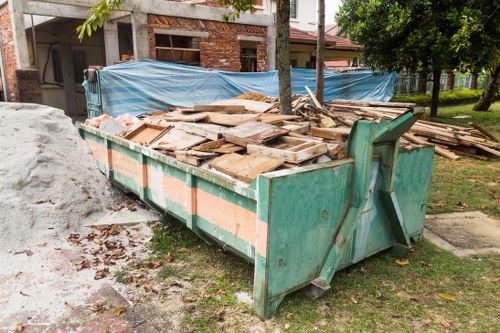
Business waste removal in Edmonton needs to be straightforward, reliable in its scope and clear about what is and is not included. Our service is built around the collection and removal of commercial waste streams from workplaces, retail units, studios, workshops and other business premises, with practical handling for everyday non-hazardous materials. The aim is simple: keep waste moving out of the way so your premises stay usable, tidy and compliant with your own internal routines.
We manage commercial clearances for items and materials that build up during day-to-day trading, refurbishment or end-of-tenancy changes. That can include office furniture, shelving, packaged rubbish, unwanted stock, redundant fixtures and mixed non-dangerous waste. Where different types of waste need different handling, we sort the work sensibly so the load is prepared for the right route rather than treated as one catch-all job.
There are situations where a business only needs a one-off clearance and others where a more regular arrangement is better. In both cases, our approach stays practical: identify what needs removing, agree the scope, and make the process easy to understand. If you are planning a clearance in Edmonton, start by choosing the service that matches the waste type. From there, you can request a quotation with confidence and decide what suits your timetable.
Commercial waste collections for everyday business needs
Commercial waste is rarely uniform. One week a premises may need old packaging and mixed rubbish removed; the next it might be surplus furniture, dismantled fittings or archived material that is no longer needed. Our business waste removal service covers these ordinary, supported tasks and focuses on getting the waste out without disrupting the rest of your operation more than necessary. The service can suit small offices, hospitality premises, local trades and light industrial settings where non-hazardous waste accumulates at different speeds.
When the waste type is known in advance, the collection can be organised more cleanly. That is particularly useful for loads containing a mix of recyclable and non-recyclable material, or where bulky items need separating from bagged waste. The key decision is not simply how much there is, but what the waste is made up of and whether any items need special handling. Clear information helps the clearance stay efficient and avoids unnecessary delay on the day.
For a useful first step, it helps to think through three points before you ask for a price: what needs removing, whether access is straightforward, and whether anything is fragile, heavy or fixed in place. If that is all you can confirm, it is still enough to begin. You can then request a quote once the scope feels settled, rather than trying to over-explain every item at the outset.
Office waste and workplace furniture removal
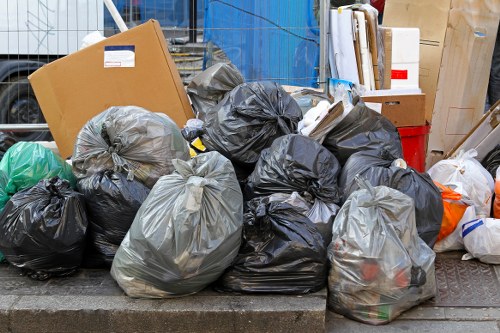
Office clearances often combine different categories of waste, from broken chairs and desks to outdated storage, packaging and general rubbish from a move or reorganisation. Our office waste removal work is aimed at clearing these items in a controlled way so the workspace can be reset, cleaned or repurposed. The focus is on practical removal rather than anything decorative or speculative, and the service can be scaled to suit a single room, an entire suite or a phased clear-out.
Furniture removal from commercial premises usually needs a bit more planning than bagged waste because bulky items can block corridors, lift access and loading areas. We therefore treat office furniture as a separate decision point rather than folding it into a generic clearance description. Chairs, tables, cupboards, reception pieces and similar items can be removed as part of a broader business waste collection, provided the job specification is clear enough to match the right vehicle and labour.
Where office clearances are being planned around a relocation or refurbishment, the priority is to keep the work orderly. It can help to group items by type, note anything that is fixed or awkwardly positioned, and identify which materials should stay behind. That makes it easier to arrange the work in a sensible sequence. Clear instructions usually lead to a cleaner handover.
Shop, stockroom and light retail clearance
Retail premises often create mixed waste streams: broken display stands, damaged packaging, surplus stock, old signage and general store-room clutter that has accumulated over time. Business waste removal for shops and stockrooms is designed to deal with that kind of practical mixture. The work can be especially useful when a business needs a room returned to service, wants to clear space behind the shop floor, or needs a tidy reset after a refit or seasonal change.
Not all retail waste is the same. Some items are simply bulky, while others are compact but numerous, such as cardboard, bags, plastics or mixed packaging. The useful decision here is whether the job is best approached as a general rubbish clearance or as a more focused removal of particular fixtures and contents. If stock is involved, it also helps to know what should be kept aside so only the unwanted material is taken.
- General retail rubbish and packaging
- Old shelving, counters and display fixtures
- Surplus stock and back-room clutter
- Reorganisation waste after a refit or move
Bulky items, fixtures and furniture disposal

Some commercial clearances are really about awkward bulk rather than ordinary rubbish. Furniture disposal for businesses may involve units that no longer fit the layout, damaged seating, redundant tables or old cabinetry left over from a change in use. The benefit of dealing with these items separately is that they can be assessed for size, weight and access needs before the work begins, instead of being treated as an afterthought.
Bulky commercial items can also include reception furnishings, meeting-room pieces, counters and storage units. These often need more care than bagged waste because they may have to be carried through shared corridors, down stairs or from upper floors. A sensible removal plan takes account of the route out as well as the item itself. In some cases, breaking down larger units first is the neatest way to complete the job without disturbing surrounding areas.
For businesses comparing options, it is worth deciding whether the task is mainly furniture disposal or a broader waste removal job. That distinction matters because it shapes the labour required and the type of load being prepared. If you are unsure, a simple description of the items is usually enough to start the conversation. Ask for a quotation once the main categories are clear.
Clearance planning, access and waste sorting
Good business waste removal is often won or lost through planning rather than heavy lifting. Access routes, parking, lifts, stairways and loading points all influence how the work can be completed. If there is restricted entry, shared access or time-sensitive building rules, those details matter because they affect the sequence of removal and the time needed on site. This is especially true where the premises remain open to staff or customers during the clearance.
There are also practical differences between a straightforward collection and a clearance involving mixed contents. Some waste can be bagged; some may need separating from reusable or retained items; some may have to be moved from several rooms or floors before loading. A useful way to think about it is this: the more varied the contents, the more important the sorting plan becomes. That helps the service stay orderly and keeps the handover clear.
When you prepare an enquiry, you do not need a perfect inventory, but you do need enough detail for the work to be understood. A short list of item types, notes on access and any unusual restrictions is usually sufficient. If you already know what must stay in place, say so plainly. If you do not, a rough outline is still better than guessing. Plan the clearance, then request the price.
About Edmonton
Edmonton is a district in the London Borough of Enfield, in north London, whose character has long been shaped by its position on routes between the capital and the Lea Valley. The area is closely associated with the historic parish of Edmonton, which appears in records from the medieval period and later developed as part of the expanding metropolitan landscape. Over time, the old village core and the surrounding streets were absorbed into the wider urban fabric, but the district still retains a recognisable sense of local identity. The name is familiar to many through literary and cultural references, including the association with the old coaching road and with writers who drew on north London settings. The area contains a mix of residential streets, high-street activity and transport connections, and its built environment reflects several periods of change rather than one single style. Around the district, streets include post-war housing, older terraces, local shops and civic buildings that speak to different phases of suburban growth. Nearby waterways and open spaces add variety to the urban layout, while the wider borough provides parks, rail links and community facilities that connect Edmonton to surrounding parts of north London. The district’s history is also tied to the northward expansion of London itself, as farmland and village land were gradually joined by roads, rail and housing. That layered past can still be sensed in the contrast between older place names and newer development. Today, Edmonton remains a working part of the capital rather than a preserved museum of its past, with everyday commercial life sitting alongside residential neighbourhoods and long-established local routes.
Hazardous items, specialist disposal and compliance-led work

Some waste cannot be treated as ordinary commercial rubbish. Hazardous items, specialist appliances and certain contaminated materials require particular handling, and that is why they need to be identified separately. Our supported service pages cover specific categories such as hazardous waste disposal and appliance-related removals, so businesses can match the job to the correct type of collection rather than forcing everything into one general description.
It is especially important not to blur the line between ordinary clearance and regulated material. If a site includes items that may need different handling, such as chemicals, specialist residues or damaged equipment, those should be described accurately before any plan is made. That keeps the work focused and helps avoid confusion about what can be taken within the agreed scope. The same principle applies to food-related units, workshop waste and anything that may have safety implications.
When specialist material is present, the best approach is to isolate it from the rest of the load and ask for a clear assessment of what belongs in the job. If the business also needs routine commercial waste removal, those elements can often be discussed together, but they should still be identified separately. For mixed or sensitive waste, clarity comes first.
Reuse, recycling and responsible waste handling
Businesses often want to know that clearance work is not just fast, but also sensibly managed. Where waste can be separated into practical categories, recycling and reuse routes may be part of the process. Our supporting page on recycling and sustainability sets out the general approach more fully, while the clearance service itself remains focused on removing waste in a way that keeps suitable materials distinct from general rubbish.
Recycling decisions are usually shaped by the type of material rather than by a single rule. Cardboard, metals, timber, plastics and mixed office contents may all follow different paths depending on condition and composition. That means it is useful to think of the clearance as a sorting task as well as a removal task. The more accurately the waste is identified, the easier it is to handle it in a way that supports sensible downstream treatment.
For customers, the practical question is often whether a particular load is mostly reusable, mostly recyclable or simply general waste. You do not need to classify every item yourself, but any advance detail helps the job be described properly. If you want to compare what can be included, a short look at the relevant service pages can help. Then you can choose the right clearance without overcomplicating it.
Pricing factors and quotation details
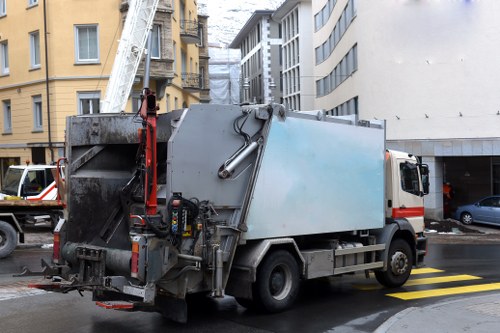
Pricing for business waste removal is usually shaped by the nature of the waste rather than by a single fixed formula. Load volume, item type, access conditions, labour needed and any requirement for sorting all influence the overall scope. A straightforward collection of bagged rubbish is different from a clearance involving bulky furniture, multiple rooms or mixed materials that need separating before removal.
It can also matter whether the job is a one-off clearance or part of a planned series of collections. Some businesses prefer to clear everything at once; others need staged removal so trading can continue with less interruption. Either way, the important point is to describe the work honestly and consistently. That makes the quotation process clearer and reduces the chance of assumptions later. If there is a specific disposal category involved, mention it rather than leaving it implied.
For a quick and sensible next step, gather the main item types, note any access restrictions and decide what stays on site. Then you can use the relevant service page if you need more detail, or make a direct request for a quotation. When you are ready, request your quote for business waste removal in Edmonton.